
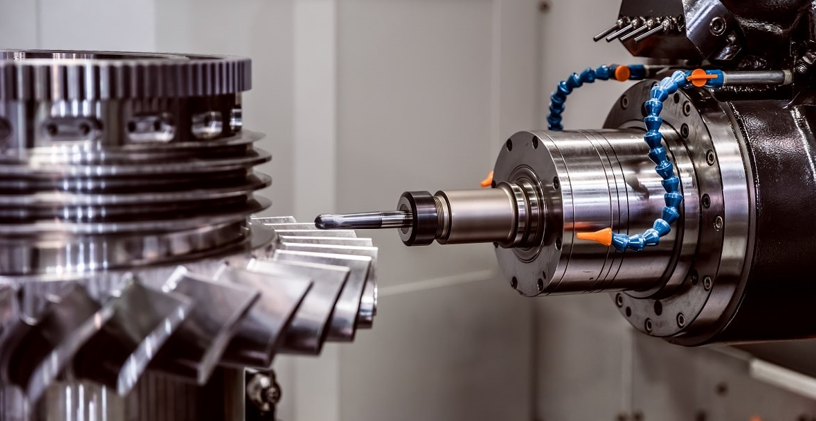
CNC technology has become one of the most powerful forces reshaping modern manufacturing, driving a transformation that affects nearly every industrial sector, from automotive and aerospace to medical devices, electronics, and consumer goods. At its core, CNC, or Computer Numerical Control, refers to the automation of machine tools through programmed software that precisely controls movement, speed, and tool operation. Unlike traditional manual machining, which depends heavily on operator skill and physical control, CNC systems rely on digital instructions that convert computer designs into highly accurate physical components. This shift from manual craftsmanship to digitally driven precision has dramatically improved production consistency, reduced error rates, and enabled manufacturers to meet the rising global demand for high-quality, complex parts at scale. Today, CNC machines can operate continuously with minimal supervision, delivering unmatched efficiency and reliability. As product designs become more sophisticated and tolerances become tighter, CNC technology has evolved from a competitive advantage into a fundamental requirement for manufacturers seeking to stay relevant in the global market.
One of the most significant ways CNC technology is transforming modern manufacturing is through unprecedented precision and repeatability. With tolerances measured in microns, CNC machines can produce identical components with extraordinary accuracy, regardless of production volume. This capability is essential for industries such as aerospace, medical, and electronics, where even the smallest deviation can compromise safety, performance, or functionality. Advanced CNC systems now integrate real-time feedback, automated calibration, and digital monitoring, allowing machines to detect errors and make continuous micro-adjustments during production. This level of control drastically reduces material waste, lowers the cost of rework, and ensures consistent product quality across large production runs. Moreover, the ability to store and reuse machining programs allows manufacturers to replicate designs perfectly at any time, supporting both mass production and on-demand manufacturing models. As markets increasingly demand customization and rapid turnaround, CNC technology enables manufacturers to deliver precision without sacrificing speed or flexibility.
CNC technology is also redefining speed and efficiency across manufacturing operations. Traditional machining processes often require manual setup changes, tool adjustments, and constant operator supervision, which slows production and increases labor costs. In contrast, modern CNC machines can perform multiple operations in a single setup, including cutting, drilling, milling, turning, and finishing, all under automated control. Multi-axis CNC machines, capable of moving tools and components across five or more axes, allow complex geometries to be produced in a single workflow that once required multiple machines and handling stages. This reduces production time significantly while improving accuracy by minimizing repositioning errors. Automation also enables lights-out manufacturing, where machines operate 24/7 with minimal human intervention. This continuous production model dramatically increases output capacity while maintaining consistent quality. As global competition intensifies and supply chains demand faster delivery times, the speed and efficiency enabled by CNC technology have become essential drivers of industrial competitiveness.
Another major transformation driven by CNC technology is the shift toward digital manufacturing ecosystems powered by CAD and CAM integration. Computer-Aided Design and Computer-Aided Manufacturing software now form the digital backbone of modern production environments, allowing engineers to design, simulate, and optimize parts before a single piece of material is cut. This seamless digital workflow enables rapid prototyping, faster design iterations, and early detection of potential manufacturing issues. Engineers can test tool paths, identify collision risks, and optimize cutting strategies within virtual environments, significantly reducing costly trial-and-error processes on physical machines. As a result, product development cycles are becoming shorter, more agile, and more cost-efficient. This digital integration also supports data-driven manufacturing, where performance metrics such as cycle time, tool wear, machine utilization, and energy consumption are continuously monitored and optimized. With the rise of Industry 4.0 and smart factories, CNC machines are no longer isolated assets but interconnected nodes within intelligent production networks that adapt in real time to changing demands.
CNC technology is also playing a central role in enabling mass customization, a trend that is rapidly reshaping modern manufacturing. Consumers increasingly demand products tailored to their specific needs, whether it is custom automotive parts, personalized medical implants, or bespoke industrial components. Traditional manufacturing systems struggle with customization because they rely on standardized tooling and fixed production methods. CNC machines, however, can switch between designs quickly through software changes rather than physical retooling. This allows manufacturers to produce small batches or even single customized units with the same efficiency and consistency as large-scale production. The ability to rapidly adjust designs and tool paths empowers businesses to respond quickly to market trends, customer preferences, and engineering updates. This flexibility is especially valuable in industries with fast innovation cycles, such as electronics, renewable energy, and precision engineering. By removing many of the traditional barriers between customization and scalability, CNC technology is enabling manufacturers to move beyond one-size-fits-all production toward highly responsive, demand-driven manufacturing models.
Beyond performance and flexibility, CNC technology is also transforming manufacturing through its impact on workforce dynamics, safety, and sustainability. While traditional machining requires extensive hands-on labor and carries higher safety risks, modern CNC systems significantly reduce direct operator exposure to cutting tools, heat, and hazardous materials. Operators now focus more on programming, supervision, and quality control rather than manual operation, shifting workforce demand toward higher technical and analytical skills. This transition supports safer working environments and creates new career paths in digital manufacturing, automation, and industrial engineering. From a sustainability perspective, CNC machining minimizes material waste through optimized cutting paths and precise resource utilization. Advanced tool management systems extend tool life, while energy-efficient motors and smart power controls reduce overall energy consumption. Additionally, the precision of CNC machines supports the use of alternative materials, lightweight alloys, and recyclable metals that contribute to greener manufacturing practices. As environmental regulations tighten and sustainability becomes a central corporate priority, CNC technology provides manufacturers with the tools needed to meet both economic and environmental performance goals.
Looking to the future, CNC technology will continue to evolve alongside advances in artificial intelligence, robotics, and connected manufacturing systems. AI-driven CNC machines will increasingly be able to optimize cutting parameters autonomously, predict tool failure before it occurs, and adapt in real time to changing material conditions. The integration of robotics will further enhance automation by enabling fully autonomous production lines where material loading, machining, inspection, and packaging occur without human intervention. Cloud-based CNC platforms will allow engineers to manage production remotely, analyze performance across global facilities, and deploy updates instantly across entire machine networks. As these technologies converge, modern manufacturing will become faster, more intelligent, and more resilient than ever before. CNC technology is no longer simply a method of shaping metal or plastic; it is becoming the digital foundation of modern industrial production. In a world where speed, precision, customization, and sustainability define success, CNC technology stands at the center of manufacturing’s transformation, shaping not only how products are made but how industries compete and innovate in the global economy.