
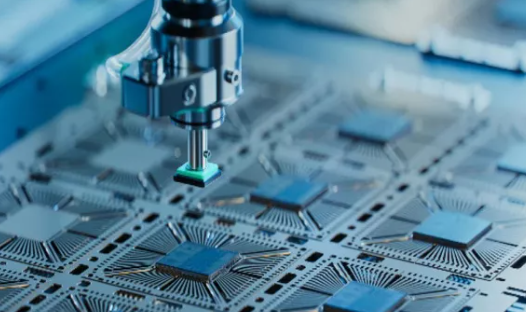
The world of manufacturing is undergoing a massive transformation driven by innovations in CNC machining, electronics, and advanced manufacturing technologies. These three fields—once separate and specialized—are now deeply interconnected, creating a new era of smarter, faster, and more efficient industrial production.
Today’s factories no longer rely solely on manual labor or traditional machining. Instead, they use automated CNC machines, sophisticated electronic control systems, and integrated IoT-powered manufacturing lines to achieve accuracy, speed, and efficiency at levels never seen before. This article explores how CNC, electronics, and manufacturing work together, why they matter, and how they are shaping the future of global industry.
What Is CNC and Why Is It Important?
CNC (Computer Numerical Control) refers to the use of computer systems to control machine tools such as milling machines, lathes, routers, and laser cutters. Unlike manual machining, CNC machines follow precise commands from G-code and M-code, allowing them to perform complex tasks with high accuracy and repeatability.
Key Advantages of CNC Machining
-
Extreme precision
-
Consistent repeatability
-
High production speed
-
Ability to create complex geometries
-
Lower labor costs
CNC plays a vital role in sectors like aerospace, automotive, robotics, medical device manufacturing, and electronics assembly.
How Electronics Power Modern CNC Machines
Modern CNC systems rely heavily on electronics and embedded systems, making them smarter and more efficient than ever. Microcontrollers such as STM32, Arduino, and industrial PLCs are used to process motor control, temperature sensing, real-time motion planning, and feedback loops.
Key Electronic Components in CNC Systems
-
Stepper and servo motor drivers
-
Microcontroller units (MCU)
-
Sensors (endstop, temperature, position encoders)
-
Power supplies and converters
-
Human-machine interfaces (HMI)
Electronics allow CNC machines to:
-
Stabilize motor movement
-
Detect collisions or misalignments
-
Adjust feed rates automatically
-
Integrate with networks for remote monitoring
This fusion of CNC hardware and electronics creates the backbone of Industry 4.0 manufacturing.
Manufacturing in the Age of Automation
The manufacturing industry has evolved beyond mass production. Today’s factories focus on precision, customization, and efficiency, supported by technologies such as:
-
Additive Manufacturing (3D printing)
-
Robotics and automation
-
Smart sensors and IoT connectivity
-
Artificial intelligence (AI) for predictive maintenance
-
Digital twins for virtual manufacturing
CNC remains a cornerstone of manufacturing—but now it works together with electronics, AI, and automation.
How CNC, Electro, and Manufacturing Interconnect
1. CNC Uses Electronics for Accuracy
Motion controllers, drivers, and sensors ensure CNC machines operate precisely at high speeds.
2. Electronics Manufacturing Uses CNC
Many electronics components—such as aluminum housings, heat sinks, PCB enclosures—are produced using CNC machining.
3. Manufacturing Relies on Both CNC and Electronics
Factories need electronics for automation and CNC for fabrication of precise parts.
4. Smart Factories Integrate All Three
Modern production lines combine:
-
CNC machining centers
-
Electronics-controlled robots
-
IoT data collection systems
This synergy improves efficiency, reduces waste, and accelerates production cycles.
Examples of CNC in Electronics Manufacturing
CNC machines are used to create:
-
Smartphone bodies
-
Laptop frames
-
Camera housings
-
PCB prototype milling
-
Metal heat dissipation components
With micron-level accuracy, CNC ensures electronic products fit together perfectly.
The Role of IoT and Embedded Systems in Manufacturing
Smart manufacturing uses sensors and controllers to track:
-
Machine health
-
Temperature
-
Vibration levels
-
Production rate
-
Power usage
Embedded systems allow machines to “communicate” with each other, enabling predictive maintenance and preventing costly downtime.
The Future of CNC, Electronics, and Manufacturing
In the coming decade, the integration between CNC, electronics, and manufacturing will become even stronger. Expected innovations include:
1. Fully Autonomous CNC Machines
AI-assisted toolpath generation and error correction.
2. AI-Based Quality Control
Electronic sensors and cameras will automatically detect product defects.
3. Energy-Efficient Manufacturing
Electronics and software will optimize power consumption in real time.
4. Hybrid Manufacturing Systems
Combining CNC machining with 3D printing for ultra-fast prototyping.
5. Digital-First Smart Factories
Real-time digital twins controlling entire production lines.
Conclusion
CNC technology, electronics, and modern manufacturing are no longer separate fields—they have merged into a powerful ecosystem that drives the global industrial world forward. Whether creating micro-precision electronic parts or large aerospace components, the synergy between CNC, embedded electronics, and automated manufacturing enables higher efficiency, better quality, and unprecedented innovation.
The future belongs to industries that can combine all three: CNC machining, advanced electronics, and smart manufacturing technologies.