
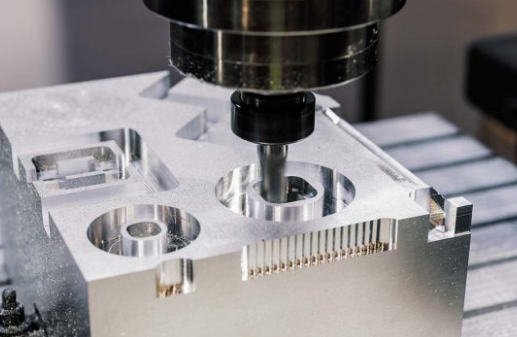
The rapid evolution of technology has pushed industries into a new era where CNC machining, electronics, and advanced manufacturing processes are tightly connected. What used to be separate sectors—machining, electrical systems, and production engineering—are now merging to build smarter factories, more efficient production lines, and highly precise components.
In today’s industrial world, the fusion of CNC and electronics plays a critical role in automation, robotics, prototyping, and mass production. As global demand for faster, more accurate, and cost-effective products grows, these technologies form the backbone of modern manufacturing.
CNC Technology: The Foundation of Precision Manufacturing
CNC (Computer Numerical Control) machines have become essential tools in industries that require accuracy, speed, and repeatability. By converting digital designs into physical parts, CNC machines can produce complex geometries with near-perfect precision.
Why CNC Matters
-
Delivers tight tolerances
-
Supports high-volume production
-
Enables rapid prototyping
-
Reduces human error
-
Works with a wide range of materials
From automotive to aerospace, CNC is the core technology that keeps global manufacturing competitive.
How Electronics Enhance CNC Performance
Electronics form the brain and nervous system of every CNC machine. Without microcontrollers, sensors, drivers, and power electronics, CNC systems would not be able to operate with the high precision required by today’s industries.
Key Electronic Elements in CNC Systems
-
Servo and stepper motor drivers
-
Microcontroller units (Arduino, STM32, ESP32)
-
Limit switches and sensor modules
-
Inverters and industrial power supplies
-
Display panels and touch-screen HMIs
These electronic components manage:
-
Motor speed
-
Axis calibration
-
Safety limits
-
Spindle control
-
Real-time feedback
The tight integration between CNC and electronics creates machines that are not only accurate but also intelligent.
Manufacturing in the Era of Digital Transformation
Manufacturing has advanced far beyond the traditional assembly line. Today’s production environments are data-driven, automated, and optimized to achieve both high efficiency and low cost.
Key Trends in Modern Manufacturing
-
Automation and robotics
-
AI-powered quality control
-
Smart sensors and industrial IoT
-
3D printing and hybrid fabrication
-
Lean manufacturing and energy efficiency
These technologies increase productivity and reduce operational costs while maintaining exceptional product quality.
The Convergence of CNC, Electro, and Manufacturing
The boundaries between CNC technology, electronics, and manufacturing processes are disappearing as factories adopt integrated systems that combine mechanical precision with electronic intelligence.
1. Electronics Control Machine Precision
Feedback sensors and microcontrollers ensure every CNC cut is accurate down to microns.
2. CNC Supports Electronics Production
CNC machines create housings, connectors, metal brackets, and structural components for electronic devices.
3. Manufacturing Integrates Both for Automation
Robotic arms controlled by electronic systems work alongside CNC machines for optimized workflow.
4. Smart Factories Depend on All Three
Real-time monitoring, predictive maintenance, and autonomous decision-making require machines that combine mechanical, electronic, and digital capabilities.
Applications Across Multiple Industries
Automotive
CNC machines produce engine blocks, gear components, and chassis parts with exacting standards.
Electronics Manufacturing
CNC milling creates smartphone frames, PCB molds, heatsinks, and various device enclosures.
Aerospace
High-strength materials like titanium and Inconel are shaped using advanced CNC machining.
Medical Devices
Implants, surgical instruments, and diagnostic equipment rely heavily on CNC precision and electronic control systems.
The Role of Embedded Systems in Industrial Automation
Embedded electronics have become essential for automating and optimizing manufacturing processes. Microcontrollers and sensors allow machines to communicate with each other and make real-time adjustments without human intervention.
Functions of Embedded Electronics
-
Monitoring machine condition
-
Collecting production data
-
Managing energy consumption
-
Running predictive maintenance algorithms
-
Enhancing safety and reliability
As factories become smarter, embedded electronics will be increasingly responsible for decision-making and workflow management.
Future Trends in CNC, Electronics, and Manufacturing
The next decade will bring even more advanced innovations, including:
1. AI-Driven CNC Automation
AI algorithms will generate toolpaths, detect errors, and optimize feed rates automatically.
2. Fully Connected Factories (Industry 5.0)
CNC machines, robots, and production sensors will communicate through a unified digital network.
3. Advanced Material Processing
New machining methods for composites, carbon fiber, and high-temperature alloys.
4. Mixed Manufacturing Technologies
Combining subtractive CNC machining with additive manufacturing for faster prototyping.
5. Sustainable Manufacturing
Electronics will optimize machines to reduce energy waste and increase environmental efficiency.
Conclusion
CNC technology, electronics, and modern manufacturing form a powerful trio that drives the advancement of global industry. As these fields continue to merge, the world will see smarter factories, more efficient production lines, and products that are more precise than ever before.
From automated CNC systems to intelligent electronics and fully digitized manufacturing plants, this technological synergy is reshaping the future of industrial production—and its impact will continue to grow in the years ahead.