
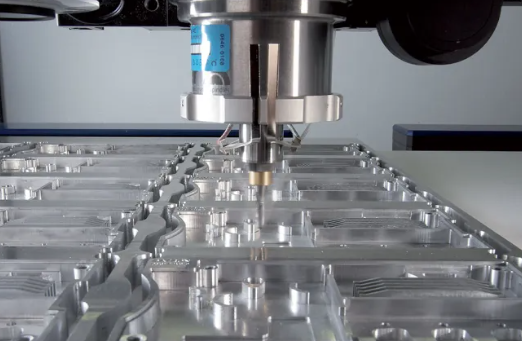
Automation is becoming the heartbeat of modern industry. From robotic arms working on automotive production lines to precision machines crafting components for smartphones and satellites, today’s manufacturing world relies on a powerful combination of CNC machining, electronics engineering, and advanced manufacturing technologies. These three pillars work together to create smarter, faster, and more efficient production environments.
As industries race toward global competitiveness, the ability to integrate electronics into mechanical systems—and support them with precise CNC fabrication—has become essential. This article explores how CNC, electronics (electro), and modern manufacturing drive the rapid growth of industrial automation.
The Role of CNC in Building Automated Machinery
CNC technology is not just used to create final products—it is also used to build the machines that create those products. Many parts of automated systems such as robotic joints, machine frames, custom brackets, and precision actuators are made using CNC machines.
Why CNC Is Crucial in Automation
-
It produces highly accurate parts for robotic systems
-
Enables fast prototyping for new machine designs
-
Ensures consistent repeatability for mechanical components
-
Supports small-batch manufacturing of custom machine parts
Without CNC machining, building advanced automation systems would be significantly slower and less reliable.
Electronics: The Intelligence Behind Automated Systems
While CNC provides the physical components, electronics provide the brain that powers automation. Microcontrollers, sensors, and motor drivers are responsible for interpreting signals, controlling movement, and maintaining precision in automated machinery.
Essential Electronics in Automation
-
Microcontrollers (ESP32, STM32, Arduino) for logic and control
-
Sensors (proximity, IR, ultrasonic, encoder) for motion feedback
-
Servo and stepper drivers for precision movement
-
Industrial PLCs for advanced automation logic
-
Power electronics to manage voltage, safety, and heat
These components allow machines to:
-
Make decisions
-
Maintain accuracy
-
Communicate with other devices
-
Detect errors and stop operation if needed
Electronics transform mechanical devices into intelligent, self-regulating machines.
Manufacturing’s Shift Toward Smart, Automated Production
Manufacturing is transitioning from manual processes to smart production systems. Factories are adopting automation to reduce costs, improve quality, and increase productivity.
Automation Trends in Modern Manufacturing
-
Robotics replacing repetitive manual labor
-
IoT integration for real-time data monitoring
-
Predictive maintenance powered by AI
-
Digital twins for testing production processes virtually
-
Hybrid manufacturing combining CNC and 3D printing
Automation enables companies to scale faster while maintaining consistent product quality.
How CNC, Electronics, and Manufacturing Work Together
1. CNC Creates Structural Components for Automated Machines
Machine housings, gears, brackets, and mounting systems are precisely cut using CNC machining.
2. Electronics Control Movement and Decision-Making
Sensor data and microcontrollers ensure machines perform tasks accurately and safely.
3. Manufacturing Integrates Both into One Automated Workflow
CNC parts are assembled with electronic systems to build robots, conveyors, CNC routers, and other automated machines.
This synergy improves efficiency, reduces errors, and increases production capacity.
Real-World Applications of CNC + Electronics + Automation
1. Automated CNC Machines
Modern CNC machines use sensors and electronics to auto-calibrate, auto-diagnose, and optimize cutting parameters.
2. Robotic Arms
Each joint relies on CNC-made parts combined with servo motors and controllers.
3. SMT and PCB Assembly Machines
Electronics manufacturing uses both CNC-made components and high-speed automation systems.
4. Automated Packaging and Logistics Systems
CNC-machined rollers, rails, and brackets support conveyor automation.
5. Industrial 3D Printers
Electronics control motors and heating elements, while CNC-made frames keep the system rigid.
The Impact of Automation on Industry
Automation powered by CNC and electronics brings major advantages:
-
Reduced labor costs
-
Faster production cycles
-
Higher accuracy and quality
-
Lower defect rates
-
Real-time data and monitoring
-
Improved safety in the workplace
Industries such as automotive, electronics, aerospace, medical equipment, and consumer goods heavily depend on this integrated technology.
Future of Automation and Machine Intelligence
As artificial intelligence continues to merge with manufacturing technologies, we will see:
1. Fully autonomous production lines
Machines will schedule jobs, order materials, and self-diagnose without human input.
2. Smarter hybrid machines
Combining CNC machining, robotics, and 3D printing in one platform.
3. Self-learning robots
Electronics and AI will enable robots to adapt to new tasks automatically.
4. Hyper-precision machining
Nanotechnology and advanced sensors will push CNC accuracy to sub-micron levels.
5. Sustainable automated factories
Energy-efficient systems controlled by smart electronics will reduce waste and emissions.
Conclusion
Automation is the future of industrial production, and it relies heavily on the powerful combination of CNC machining, electronics engineering, and advanced manufacturing technology. As these three elements continue to merge, companies will benefit from faster production, higher accuracy, reduced costs, and smarter machines.
The industries that embrace this integration today will be the leaders of tomorrow.