
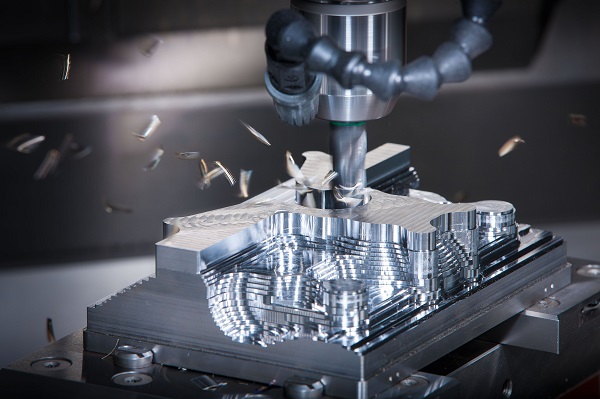
In the rapidly evolving world of manufacturing, Computer Numerical Control technology stands as one of the most transformative pillars of modern production. Over the past decade, CNC systems have advanced far beyond traditional machining operations, shifting from simple automation tools into highly intelligent, interconnected technologies that redefine productivity, precision, and operational efficiency. Today’s manufacturers face intense global competition, shrinking lead times, and growing demand for customization, forcing companies to adopt innovations that allow them to deliver faster, more accurate, and more cost-effective products. This pressure has led to an unprecedented wave of innovation in CNC machinery, software, and workflow integration. From AI-powered machining strategies to hybrid manufacturing systems and real-time data analytics, the latest CNC technologies are not only improving output but reshaping the future of industrial operations across automotive, aerospace, medical, energy, and consumer product sectors. By embracing these advancements, manufacturers gain the ability to streamline complex processes, reduce waste, minimize downtime, and maximize the value of every production cycle. The following exploration highlights the most cutting-edge CNC innovations driving productivity gains and explains how they are elevating the entire manufacturing landscape.
One of the most groundbreaking developments influencing CNC productivity today is the integration of artificial intelligence and machine learning into machining workflows. Traditional machining required operators to rely heavily on experience, intuition, and manual calculations to optimize parameters such as feed rate, cutting depth, spindle speed, and tool movement. Today, AI-driven CNC systems analyze real-time data from sensors embedded throughout the machine, adjusting these parameters automatically to maintain precision while minimizing wear and energy consumption. Machine learning algorithms evaluate thousands of machining scenarios, enabling CNC equipment to predict potential issues before they occur and recommend adjustments that improve efficiency. This shift moves manufacturers away from reactive problem-solving toward proactive optimization. Predictive maintenance has become especially valuable, as machine downtime can cost factories thousands of dollars per hour. AI-equipped CNC machines monitor vibrations, temperature, torque, and acoustic signals to identify tool degradation or spindle problems long before failure becomes visible, allowing timely maintenance that avoids costly breakdowns. Additionally, advanced AI simulation tools enable engineers to test toolpaths, cutting conditions, and design iterations virtually, eliminating trial-and-error waste. This infusion of intelligence not only shortens cycle times but democratizes high-level machining capabilities, empowering less-experienced operators to achieve expert results and elevating productivity across the entire production floor.
Another major innovation boosting CNC productivity is the widespread adoption of multi-axis and hybrid manufacturing systems. While traditional 3-axis CNC machines remain useful for basic milling and drilling operations, modern manufacturing demands increasingly complex geometries and precision. Multi-axis CNC systems—such as 4-axis, 5-axis, and even 9-axis machines—allow simultaneous movement of the cutting tool and the workpiece, enabling the production of intricate components that once required multiple setups or manual intervention. By reducing the need for repositioning, multi-axis machines dramatically shorten production times while improving accuracy and surface finish. These systems have become indispensable in industries requiring detailed contours and tight tolerances, such as aerospace turbine blades, medical implants, and automotive performance parts. Even more transformative is the emergence of hybrid manufacturing systems that combine CNC machining with additive manufacturing technologies such as metal 3D printing. This fusion allows manufacturers to build complex structures layer by layer and then finish them with CNC precision, creating components that are both lightweight and structurally optimized. The ability to perform additive and subtractive processes on the same machine accelerates prototyping, reduces material waste, and eliminates workflow bottlenecks associated with transferring parts between multiple pieces of equipment. As hybrid technology continues to evolve, it promises to redefine what is possible in part design, enabling innovations that would have been impossible with traditional manufacturing alone.
Digital connectivity and smart factory infrastructure have also become essential drivers of CNC productivity, fueled by the adoption of Industry 4.0 principles and Internet-of-Things technology. Modern CNC systems are increasingly equipped with networked sensors, cloud-based monitoring platforms, and automation software that enable seamless communication between machines, operators, and supervisory systems. Manufacturers can now capture and analyze gigabytes of production data in real time, gaining insights into tool performance, production rates, spindle loads, energy consumption, and machine availability. These data streams empower companies to identify inefficiencies, detect anomalies, and refine workflows continuously. For example, digital twins—virtual replicas of CNC machines and production environments—allow manufacturers to simulate machining processes, optimize layouts, and forecast productivity under different conditions without disrupting operations. Meanwhile, remote monitoring and control systems let operators oversee multiple machines simultaneously, even from offsite locations, enabling greater flexibility and reducing labor-related bottlenecks. Automated scheduling software coordinates tool changes, material handling, and maintenance cycles to ensure consistent throughput. When combined with robotic loading systems and automated storage solutions, CNC machines can operate continuously with minimal human intervention, supporting 24/7 production capabilities. As factories become more connected, CNC systems evolve into central components of highly efficient, autonomous production ecosystems designed for maximum output and minimal downtime.
Another transformative innovation boosting CNC performance involves the development of advanced tooling, materials, and cutting technologies. High-performance cutting tools made from carbide composites, polycrystalline diamond, and cubic boron nitride allow faster cutting speeds, longer tool life, and improved heat resistance. Coatings such as titanium aluminum nitride and diamond-like carbon reduce friction and protect tools from wear, enabling consistent performance under demanding conditions. New tool geometries, micro-textured surfaces, and coolant-through designs further enhance cutting stability and chip evacuation. In addition to tooling, modern CNC machines incorporate high-speed spindles capable of tens of thousands of rotations per minute, enabling ultra-precise machining of lightweight alloys, composites, and hardened metals. Innovations in coolant delivery systems and high-pressure lubrication reduce friction, extend tool life, and prevent thermal deformation of materials. Meanwhile, vibration-dampening technology, adaptive feed control, and servo-driven precision improve surface quality while maximizing material removal rates. Taken together, these advancements enable CNC machines to operate at higher speeds and with greater consistency than ever before, dramatically enhancing productivity and lowering operational costs. For manufacturers working with difficult-to-machine materials such as titanium, Inconel, or carbon fiber composites, these tool and spindle innovations make it possible to produce complex parts faster, more accurately, and with greater reliability—qualities essential in high-performance industries where quality and precision are non-negotiable.
Looking ahead, CNC innovation continues to accelerate as manufacturers push the boundaries of automation, intelligence, and material science. Future CNC systems are expected to incorporate even more advanced AI capabilities, enabling fully autonomous machining environments where machines self-calibrate, self-optimize, and self-correct without human intervention. Real-time adaptive control will allow machines to adjust cutting conditions on the fly to compensate for material inconsistencies, tool wear, or thermal expansion, ensuring consistent quality across every production run. The integration of quantum computing, though still in its early stages, may eventually transform simulation and optimization processes, allowing instant analysis of millions of machining variables. New sustainable manufacturing technologies will also influence CNC design, encouraging the adoption of energy-efficient motors, recyclable materials, and environmentally friendly coolant systems. As materials evolve—such as nanocomposites, ultra-light alloys, and fiber-reinforced structures—CNC machines will adapt to handle these advanced substrates with greater efficiency and precision. The merging of robotics, AI, digital twins, and advanced machining will create production environments capable of operating with unprecedented autonomy, flexibility, and intelligence. In this future landscape, manufacturers who embrace innovation early will enjoy significant competitive advantages, from reduced operational costs to faster product development cycles and superior quality control. By adopting the latest CNC technologies, companies place themselves at the forefront of global production excellence, unlocking new possibilities and creating more agile, efficient, and resilient manufacturing ecosystems.